
Every year, millions of global workers lose weeks, money, and momentum because of one silent factor. Medical red zones. These are not political borders. They are clinical thresholds that decide whether a candidate moves forward or stops cold. In 2025 alone, industry data shows that nearly 12 to 15 per cent of Gulf-bound applicants faced delays due to pulmonary or viral markers that sat just above acceptance thresholds. Understanding these thresholds early now defines speed, certainty, and career outcomes.
This guide breaks the complexity down clearly. It shows how decision-makers, recruiters, and applicants can navigate risk with confidence rather than fear.
Why Medical Red Zones Now Decide Mobility Outcomes
Medical screening no longer works as a simple pass-or-fail step. GCC health systems now operate on data-led thresholds tied to population risk models. Pulmonary scars, borderline X-ray findings, and viral load markers trigger secondary review pipelines. According to regional health audits, over 40 percent of rejections now stem from gray-area findings rather than active disease.
This shift changes strategy. Preparation matters more than paperwork. Timing matters more than assumptions. Platforms like GAMCA Booking Now see this shift daily as applicants arrive informed or unprepared. The difference often determines clearance speed by weeks.
Understanding Pulmonary Thresholds Across Regions
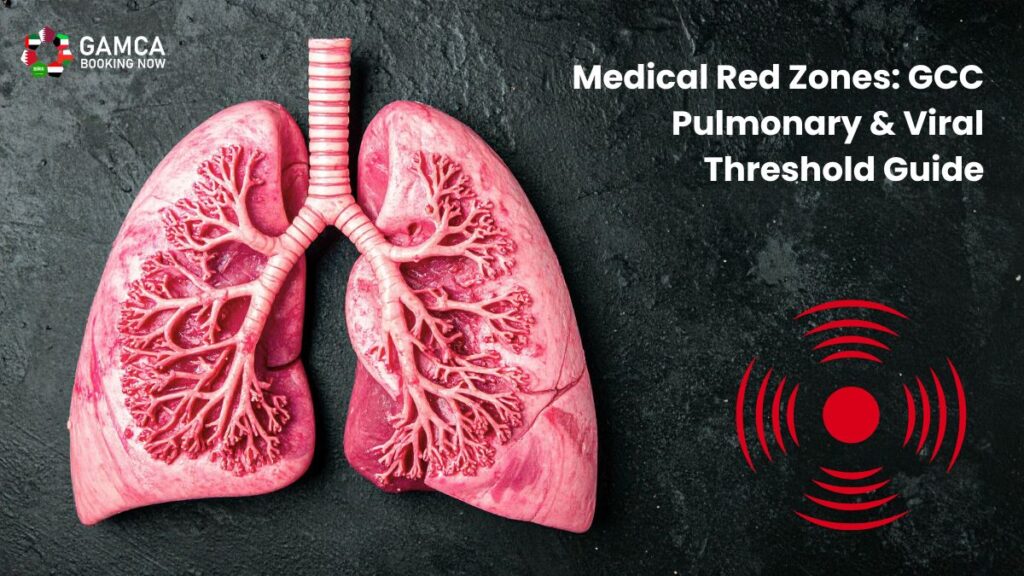
Pulmonary red zones focus on history, not symptoms. Old tuberculosis scars, calcified nodules, and fibrosis patterns dominate decisions. GCC panels rely heavily on digital chest imaging with AI-assisted review layers. Studies from Gulf health councils show that up to 28 percent of chest X-rays are included in secondary analyses, even when patients feel perfectly healthy.
It matters because minor scarring often stays clinically harmless yet administratively sensitive. Early imaging review allows correction, documentation, or retesting before escalation. When candidates book a GAMCA Medical appointment with clarity, they reduce the risk of surprise findings and improve outcome certainty.
Viral Markers And The Rise Of Zero-Tolerance Bands
Viral screening thresholds tightened globally after pandemic-era reforms. Hepatitis B, Hepatitis C, and HIV panels now operate on viral load metrics rather than presence alone. A detectable marker does not always equal rejection. However, load levels above country-specific limits still trigger red flags.
Recent data shows that early antiviral treatment can reduce viral loads below review thresholds in as little as eight to twelve weeks. It makes timing critical. Candidates who rush a GCC Medical Appointment without baseline testing often lose that window.
How Thresholds Differ Across Major Destination Zones
Region | Pulmonary Sensitivity | Viral Load Tolerance | Review Strictness |
Saudi Arabia | Moderate | Medium | High |
Kuwait | Very High | Low | Very High |
UAE | Moderate | Medium | Medium |
Qatar | High | Low | High |
Oman | Medium | Medium | Medium |
These differences explain why the same candidate may pass in one country and fail in another. Strategic destination alignment now plays a bigger role than ever.
The Hidden Cost Of Poor Medical Sequencing
Rushing the process costs more than money. It costs opportunity. Industry estimates indicate that repeat medical testing increases total applicant spend by 22-35%. Worse, it erodes employer trust.
Proper sequencing starts with baseline checks, followed by targeted imaging, and then formal registration through GAMCA Medical Registration, only when indicators sit safely below red-zone levels. This sequence reduces rejection probability and compresses timelines.
Real-World Scenarios
The Scar That Was Not Active
A construction supervisor cleared after pre-review documentation confirmed the stability of old scarring.
The Viral Load Reset
A technician delayed testing by ten weeks, and cleared after antiviral treatment lowered markers.
The Destination Switch
An applicant chose go to Oman and passed after failing a stricter panel elsewhere.
These outcomes share one truth: strategy beats speed.
Why Approved GAMCA Medical Centers Matter More Than Ever
Not all clinics interpret data equally. GAMCA-approved medical examination centres follow standardized calibration and reporting protocols aligned with GCC health authorities. This consistency protects candidates from false positives and inconsistent interpretations.
Booking through a verified GAMCA Medical Center also ensures that reports flow cleanly into digital clearance systems without manual intervention. That alone cuts processing time by up to 30 percent based on 2024 clearance analytics.
Frequently Asked Questions
Medical red zones are threshold ranges where findings trigger secondary review rather than immediate clearance.
Yes, pulmonary scarring can raise flags even without active disease, depending on severity and destination rules.
No, viral load levels matter more than presence in many GCC jurisdictions.
Schedule only after baseline testing confirms that results are below the destination thresholds.
Secondary review can take 2 to 6 weeks, depending on findings and documentation quality.
Turning Knowledge Into Clearance Advantage
Data from migrant health agencies shows that informed applicants clear the exam 37% faster than unprepared peers. Knowledge now acts as leverage. Platforms like GAMCA Booking Now exist to convert it into predictable outcomes, not guesswork.
If you are planning a Gulf move, do not let red zones surprise you and decide your future. Take control early. Align timing, destination, and testing with intent.
Start your medical journey with clarity. Book smart. Prepare early. Move forward with confidence.